

Capital with Purpose


Investing in Social Resilience
In the traditional view of a sovereign wealth fund, success is measured by the height of the “ceiling”. It is the alpha generated, the industries disrupted and the commercial returns secured. However, at Khazanah, we recognise that the structural integrity of a nation’s economy is equally dependent on the strength of its “floor.” As part of the Ekonomi MADANI framework, our commitment to building Vibrant Communities is not mere philanthropy. It is a commitment to the social fabric that sets us apart from purely commercial entities, ensuring that our mandate remains fundamentally human-centric and for the advancement of Malaysia and its people.
It is what gives Khazanah its soul.
Social Capital as a Leading Indicator
For a long-term steward, social fragmentation is a systemic risk. Entrenched inequality, urban decay and the vulnerability gap in underserved communities are not just social issues. They are economic friction points that can impede national productivity and destabilise the environment in which our commercial assets operate. By investing in social capital, we are mitigating these long-term risks. We believe that a resilient community is the ultimate hedge against economic volatility.
To execute this mandate with precision, Khazanah operates as a hub, serving as the anchor that provides the strategic alignment, long-term capital stability and the ethical mandate that connects social outcomes to national progress. Assisting us are the spokes, comprising the independent, expert-led execution arms consisting of Yayasan Hasanah, Think City, Yayasan Khazanah and the Khazanah Research Institute (KRI), all empowered with the autonomy to drive ground-level impact.
This structure ensures that while our commercial portfolio pursues “Raising the Ceiling,” our social ecosystem is professionally enabled to “Raise the Floor,” creating a more balanced and resilient Malaysia.
Why Policy Alone Is Insufficient
While high-level government policies aim to “Raise the Floor,” a critical gap often exists between policy intent and ground-level execution. Traditional top-down interventions frequently lack the specialised, localised expertise required to transform complex social environments. Whether it is the physical and social decay of public housing (PPRs) or the persistent mismatch between graduate skills and industry needs, these are multifaceted problems that capital alone cannot solve. They require a “thinking and doing” approach that addresses the root causes of stagnation.
The Need for Institutional Logic
For Khazanah, building vibrant communities requires moving beyond a “grant-and-forget” mentality. It requires an institutional logic that treats social challenges with the same rigour as commercial ones. We identified that to create lasting impact, we must address three friction points:
Policy Fragmentation
The need for evidence-based research to inform sustainable fiscal and social reforms.
Urban Stagnation
The need for heritage-led and climate-resilient urban regeneration that restores pride and economic utility to cities.
Human Capital Mismatch
The need for a talent pipeline that is not only academically certified but industry-ready and values-driven.
The Mechanics of Impact: Precision-Led Execution
To address the vulnerability gap, Khazanah does not rely on a monolithic administrative body. Instead, we orchestrate a specialised social ecosystem that allows us to address the root causes of an issue through a coordinated framework.
Firstly, before action comes understanding. The Khazanah Research Institute (KRI) provides the intellectual bedrock for our social interventions. In 2025, KRI moved beyond identifying gaps to designing sustainable frameworks for housing affordability, social protection and industrial policy. By analysing the evolution of industrial linkages and the necessity of revenue reform, KRI ensures that Khazanah’s social investments are anchored in data-driven reality rather than anecdotal need.
Moving from that point, as our primary grant-making arm, Yayasan Hasanah transforms policy research into ground-level impact. Transitioning away from short-term project cycles, Hasanah adopts an ecosystem-based approach, investing in the systems and people that sustain communities. To date, Hasanah has reached over four million people through 1,100 projects, focusing on long-term outcomes in PPRs in the Klang Valley. Here, the focus is on building grassroots leadership and community ownership—turning public housing into vibrant, self-managed neighbourhoods.
A vibrant community also requires a resilient physical environment. Think City acts as our urban architect, focusing on heritage-led regeneration and climate resilience. By ensuring that cities grow based on their own cultural identity rather than imported templates, Think City restores economic utility and social pride to urban centres. Their work in the Klang Valley and George Town demonstrates that liveable, inclusive cities are the product of place-based action and nature-based solutions.
To tie this all up into one cohesive blueprint, we consider human capital to be the ultimate asset class for national resilience. This is where Yayasan Khazanah focuses on the “ceiling,” nurturing a prestigious pipeline of future leaders through leadership development and scholarships to top-tier global institutions.
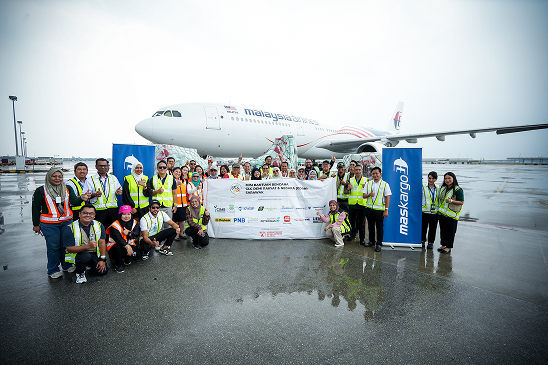
Meanwhile, K-Youth focuses on the “floor,” with a commitment in 2025 to equip 11,000 youths with high-demand skills in sectors like semiconductors and MRO. With an 85% employment success rate for its primary track, K-Youth is not just training students; it is bridging the gap between underserved backgrounds and the high-value workforce.
Looking Forward: From Outputs to Sustainability
For a sovereign wealth fund, the ultimate measure of success in the social sphere is not the volume of capital deployed, but the durability and sustainability of the systems left behind. Our goal is to ensure that every intervention, whether a scholarship, an urban park, or a policy recommendation, is designed for institutional sustainability. We have to move beyond project cycles toward a model of long-term stewardship where communities are empowered to maintain and grow the progress they have achieved.
The culmination of our work is a Malaysia that is fundamentally more prepared for the future. Ultimately, this work ensures that Khazanah remains a living institution with a moral compass. We are not merely a harvester of returns; we are a dedicated steward of the Malaysian people. By integrating our commercial rigour with a human-centric soul, we ensure that as we “Advance Malaysia,” we do so by bringing the entire nation along with us.
Sidebar 1: Building Systems That Communities Can Sustain
Yayasan Hasanah is the impact-based foundation of Khazanah Nasional Berhad, focused on strengthening the social and community systems that enable inclusive development. Established in 2015, it is more than a grant-making organisation. It operates as a convenor and ecosystem builder, combining funding with capacity building, stakeholder coordination and implementation support to enable communities and partners to sustain outcomes over time. To date, Yayasan Hasanah has impacted the lives of over four million people in Malaysia, across all layers of society.
Initiative
Omadal Island Community Ecosystem, Sabah
Impact
Established alternative learning, community-based healthcare and livelihood pathways such as seaweed farming within a largely undocumented community. Improved access to basic services and enabled local youth to take on roles as teachers and health workers, strengthening internal capability and reducing reliance on external actors.
Initiative
Tanjung Kepah Coastal Restoration, Perak
Impact
Rebuilt mangrove ecosystems through science-led intervention and community participation, increasing survival rates to about 70% and restoring coastal protection. The return of marine life has begun to stabilise local fishing livelihoods.
Initiative
Social Reintegration through Employment, Kuantan
Impact
Created structured employment pathways for individuals in recovery from addiction through a community-run food court model. Participants secured stable income, with some gaining confidence to start their own F&B business, while public interaction helped rebuild trust and social acceptance.
Initiative
CELIK Education Programme, Tawau
Impact
Improved student attendance and learning outcomes by pairing academic lessons with football training sessions. Increased classroom participation and strengthened discipline and social development among at-risk children.
Sidebar 2: Developing Talent for National Leadership

Yayasan Khazanah is responsible for identifying and developing high-potential Malaysians through structured scholarship and leadership programmes. Established in 2006, its role extends beyond funding education to building a pipeline of future leaders equipped with the skills, exposure and values required to contribute across sectors critical to Malaysia’s long-term development.
Initiative
Global and Domestic Scholarship Pathways
Impact
Supported more than 1,700 scholars across local and international institutions, creating access to high-quality education while building a diverse talent pool positioned to enter key sectors and leadership roles.
Initiative
Leadership Development and Industry Exposure
Impact
Combined academic sponsorship with internships, mentorship and placements in government-linked companies and partner organisations. This has strengthened workplace readiness, facilitating more effective transitions into roles aligned with national priorities and enhancing overall employability.
Initiative
Public Health and Policy Contribution
Impact
Scholars have translated academic training into policy and institutional impact. In one case, research in addiction medicine contributed to national drug policy development, demonstrating how specialised expertise can inform public systems.
Initiative
Community and Social Engagement
Impact
Integrated volunteering and community-based learning into the scholar journey, strengthening awareness of social challenges and encouraging participation in initiatives that extend beyond individual career advancement.
“The scholarship and my time at Cambridge gave me the skills, exposure and confidence to pursue opportunities beyond my original field. It ultimately led me from the automotive industry into clean energy, where I now contribute to the renewable energy sector at Gentari.”
Syed Malek Faisal Bin Syed Mohamad
Head of Renewable Energy Malaysia, Gentari
“My research in addiction medicine began as an academic pursuit but eventually contributed to Malaysia’s national drug policy discussions. It showed me how specialised expertise can move beyond academia and help shape public systems and policy.”
Dr. Rashidi Mohamed bin Pakri Mohamed
Consultant Family Physician, Senior Lecturer at UKM and CEO, Optima Wellness and Skin Center
“The value of the scholarship lies not only in where it sends its scholars, but in how it strengthens those already committed to making a difference. Beyond my professional role, I continue to mentor underprivileged students and support refugee education initiatives because I believe access to opportunity should be widened for others as well.”
Chow Shenn Kuan
Senior Manager of Education Advocacy, Yayasan Hasanah
Sidebar 3: Informing Policy Through Evidence

The Khazanah Research Institute (KRI) was founded in 2014 to be an independent policy research institute focused on advancing evidence-based solutions to Malaysia’s structural socio-economic challenges. Its role is to strengthen policy thinking, public discourse and institutional decision-making through research, convening and advocacy.
Initiative
Housing Reform – Build Then Sell Model
Impact
Contributed to policy discussions on shifting development risk from homebuyers to developers, improving accountability and consumer protection. The model has gained traction in national housing reform considerations.
Initiative
Labour Market and Wage Policy Research
Impact
Informed national-level policy development through contributions to the National Wage Council, National Human Resource Policy, graduate wage guidelines and broader labour policy frameworks, shaping how wage structures and workforce challenges are addressed.
Initiative
Artificial Intelligence Governance Study
Impact
Produced research and convened multi-stakeholder discussions involving public and private sector actors, strengthening policy readiness and positioning KRI as a reference point in national and regional AI governance conversations.
Initiative
Public Transport and Urban Mobility Research
Impact
Influenced how transport reliability is framed in policy and public discourse, shifting the focus from rail and bus systems alone to the full commuter journey, including first and last-mile connectivity, bus stop experience, and broader considerations of network integration and service quality.
Sidebar 4: Regenerating Cities Through Community-Led Action

Started in 2009, Think City is a “think-and-do tank” focused on making cities more liveable, sustainable and inclusive. Operating across urban design, place-making, heritage conservation, climate resilience and community development, it works with communities, governments and partners to deliver place-based interventions that integrate physical, economic and social outcomes.
Initiative
Kampung Attap Regeneration, Kuala Lumpur
Impact
Revitalised a declining historic quarter through adaptive reuse, small grants and community-led activation. More than 30 creative tenants established operations alongside existing residents, restoring economic activity while retaining local character.
Initiative
Kita-untuk-Kita (K2K) Programme, Klang Valley PPRs
Impact
Transformed shared spaces in public housing into community-managed hubs. Residents mobilised resources beyond initial grants, leading to over 60 community-led projects and stronger local ownership of neighbourhood development.
Initiative
George Town Heritage Conservation Programme
Impact
Restored heritage buildings and supported local businesses through a grant-based approach that attracted co-investment. The programme strengthened the local economy while preserving the cultural fabric of the city.
Initiative
Penang Nature-based Climate Adaptation Programme
Impact
Established Malaysia’s national pilot for urban climate adaptation. Ten urban greening projects brought communities into shared climate action, while parallel programmes built capacity among women, youth, and local councils to lead long-term resilience. The approach is now being adapted across other Malaysian cities, including Batu Pahat.
Sidebar 5: Bridging Skills to Employment
K-Youth is Khazanah’s flagship programme to strengthen youth employability, focusing on equipping young Malaysians with industry-relevant skills and pathways into sustainable employment. Designed as a multi-track initiative, it addresses different stages of the talent pipeline, from early preparation to workforce entry, while working closely with industry partners to align training with real job demand.
Initiative
Track A (Accelerate) – Industry-Aligned Skills Training
Impact
Trained graduates in high-demand sectors such as semiconductors and MRO, with about 85% securing employment upon completion, improving the transition from education to workforce.
“One story that has stayed with us was a young woman who joined our aircraft painting programme after struggling to find opportunities in the industry. She was the only female participant in her batch. Today, she works proudly as an aircraft painter. Seeing lives change in such tangible ways is a powerful reminder of why programmes like K-Youth matter.”
Seri Nurfahana
Programme Partner, Aviation (Machinery & Equipment)
Initiative
Track B (Nurture) – Early Talent Development
Impact
Engaged students before graduation to build technical and soft skills, strengthening readiness for employment and reducing the gap between academic training and industry expectations.
“Before joining the programme, I lacked discipline and often felt uncertain about my future. Over time, I became more focused, responsible and clearer about what I wanted to achieve. The experience changed the way I approached both work and life.”
Muhammad Haikal bin Aslinoor
SKM Level 2 Graduate, Semiconductor Track
Initiative
Track C (Optimise) – Educator and Ecosystem Uplift
Impact
Upskilled lecturers and career advisors to align curricula and guidance with evolving industry needs, improving the quality and relevance of talent development across institutions.
“One of the most meaningful outcomes of the programme was seeing participants grow from being uncertain about their future to becoming confident professionals, with some even returning to mentor new participants. It reflects the importance of aligning talent development with real industry needs and long-term employability.”
Faridah Ismail
Programme Partner, Machinery & Equipment (M&E) and Digital & Technology (D&T)
Initiative
GIFT Programme (Global Initiative for Future Talent)
Impact
Piloted enhanced training combining digital, technical and behavioural competencies, resulting in improved employability outcomes and access to higher-quality job placements.
“The programme helped me bridge the gap between university and the workplace. I gained confidence, practical exposure and a clearer sense of direction, which eventually led me to secure a role in data analytics at PETRONAS.”
Albert Wong Zhu Wen
Bachelor of Computer Science (Software Engineering), Universiti Malaysia Pahang Al-Sultan Abdullah (UMPSA)
Sidebar 6: Preserving Nature Within the City
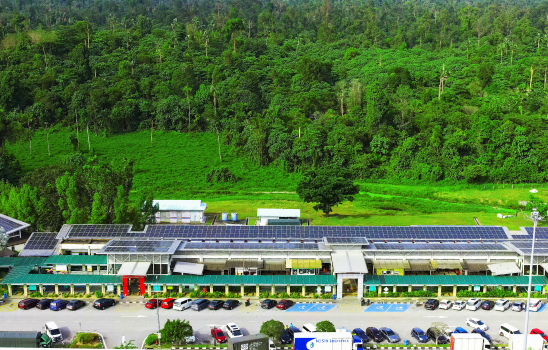
Taman Tugu is a conservation-led urban rainforest park in Kuala Lumpur, created by restoring a previously degraded site into a publicly accessible green space. Spanning 66 acres, the park conserves about 1,000 mature trees and includes over 5,000 planted native species, strengthening biodiversity within the city. Since opening in 2018, it has recorded more than 1.7 million visits, providing a space for recreation, environmental learning and community engagement. Programmes such as guided walks, workshops and public events encourage active participation in environmental stewardship, while partnerships with civil society organisations and volunteers support ongoing maintenance and outreach. By prioritising preservation over commercial use, Taman Tugu demonstrates how urban land can be managed to deliver long-term environmental and social value.
Sidebar 7: Expanding Talent Through Global Exposure
The Khazanah Residency Programme (KRP) develops mid-career Malaysian professionals by placing them in residencies at leading global institutions, focusing on journalists, communications practitioners and artists. Through programmes such as the Khazanah Nasional Wolfson Press Fellowship at the University of Cambridge and the Khazanah Associate Artist Residency in London, participants gain exposure to international practices, research opportunities and cross-cultural exchange.
Since 2013, 47 professionals have participated, with outcomes reflected in expanded professional capabilities, new creative work and contributions to public discourse and industry practice. Alumni remain engaged through outreach, mentorship and knowledge-sharing initiatives, extending the programme’s impact beyond individual participants. By strengthening perspective, capability and networks, KRP contributes to the development of talent within Malaysia’s media and creative sectors.
“The Fellowship gave me the space to step back from the demands of daily newsroom work and think more critically about the future of journalism. I returned with a broader perspective, a more structured way of thinking, and a stronger understanding of how emerging tools and global practices can strengthen public trust and reporting.”
Ameerul Eiman,
KNWPF Fellow 2025
“The residency deepened my understanding of myself as much as the industry. Observing how London-based artists work strengthened my confidence in sustaining an independent practice and helped me reflect on what could be improved within the Malaysian art scene.