

Capital with Purpose
Securing the Future

Securing the Future
Malaysia’s development story has always been shaped by a careful balance between growth, inclusion and long-term stability. In recent years, that balance has come under greater strain. Economic transitions are accelerating, expectations on institutions have broadened, and the consequences of investment decisions are felt more visibly across communities, industries and the natural environment.
In this context, the role of long-term capital has become more consequential. It is no longer sufficient to generate returns within the boundaries of a portfolio. There is a growing expectation that capital should also contribute to the resilience of the system it operates within, whether through supporting economic stability, enabling liveable environments or strengthening the social fabric that underpins growth.
This expectation is not entirely new. From its inception, Khazanah was guided by a view that the creation of enduring wealth cannot be separated from the health of the society and environment that sustains it. What has changed is the urgency of action, the transparency of intent and the breadth of accountability that now comes with it.
From Building Foundations to Reframing the Question
Khazanah’s sustainability journey did not begin in response to recent shifts but has evolved alongside them. Long before Environmental, Social and Governance (ESG) and sustainability entered the mainstream, considerations of value protection, risk management and responsible stewardship were already part of Khazanah’s institutional DNA. Since 2004, early signals were embedded through investment exclusions, reflecting the belief that not all returns are equal and that capital allocation should align with the broader responsibility, stewardship and societal outcomes.
This initial conviction was followed by a period of deeper inquiry. Between 2009 and 2015, internal initiatives sought to understand how emerging issues, particularly climate-related risks and sustainability-adjusted valuation models, could influence long-term investment outcomes and portfolio valuation. These efforts marked an early attempt to translate sustainability from principle into the language of investment analysis.
As this analytical foundation strengthened, the focus shifted towards formalising governance and expectations. The introduction of the Responsible Investments Policy in 2019 embedded ESG considerations into investment processes. Subsequent efforts, including the Shareholder Expectations and Investment Stewardship document in 2022, which incorporated Net Zero into voting policy, extended these expectations across portfolio companies, reinforcing Khazanah’s role as an active steward in sustainability issues.
This progression culminated in the Sustainability Framework and ESG Targets introduced in 2022, which established a structured approach to sustainability anchored in the familiar pillars of ESG. By the end of its cycle in 2024, most of the objectives set under this framework had been achieved, and sustainability had been embedded across investment processes, decision-making and reporting within Khazanah, albeit with opportunities for improvement.
What changed thereafter was not the level of ambition, but the nature of the questions being asked. As the external environment evolved, it became increasingly clear that a pillar-based ESG approach, while still relevant, could not fully capture the broader set of responsibilities associated with Khazanah’s mandate. The focus on how sustainability factors affect financial performance needed to be complemented by a clearer understanding of how Khazanah’s investments, and our companies, in turn, shape outcomes across the economy, environment and society.
Expanding the Lens: From Impact on Us to Impact by Us
This shift was formalised through the adoption of a double materiality perspective in 2024, extending the lens beyond financial impact to include real-world effects. It provided a more complete map of what matters, to whom, and why, and in doing so enhanced sustainability parameters beyond the question of risk management and compliance to also factor in contributions and accountability.
The 2024 materiality assessment identified 16 material issues across governance, economic, social and environmental dimensions that were highly material to Khazanah’s role as Malaysia’s sovereign wealth fund and long-term steward of national assets. Among the most significant themes were governance and business ethics, financial performance and stability, nation-building and socio-economic development, responsible investment practices, talent and workforce development, climate resilience and the long-term sustainability of strategic infrastructure and communities. The findings also reinforced the interconnected nature of these priorities, where governance, financial resilience and societal outcomes increasingly shape one another.
In practical terms, this reflects a long-standing line of inquiry within Khazanah: how the gap between market value and broader societal value can represent both risk and opportunity when left unaddressed. From that point, the direction of travel and scale became clearer, not as an incremental adjustment, but as a necessary broadening of how value itself is understood. This meant recognising that long-term investment outcomes are increasingly linked to the resilience of systems around them, whether infrastructure, communities, institutions or the environment itself.
The result is a framework that encourages a more integrated view of stewardship. One that considers not only how sustainability factors may affect investment performance, but also how investments themselves can shape national competitiveness, social resilience and long-term outcomes for Malaysia and its people.
Converging Roles in Malaysia’s Development
As Malaysia’s sovereign wealth fund, Khazanah operates across three distinct but converging roles. As a responsible investor and asset owner, we safeguard portfolio resilience by balancing risk, return and opportunity. As a national advocate, we influence from the perspective of a sovereign wealth fund by engaging government, regulators and peers on policies and the conditions that make long-term value creation sustainable; and as a committed enterprise, we shape the culture and talent that carry these responsibilities forward. Each of these roles carries distinct expectations, yet in practice they converge. Decisions made at the investment level shape outcomes beyond the balance sheet, and organisational priorities influence how those decisions are carried through. Bringing these dimensions into alignment therefore became central to the next phase of Khazanah’s sustainability journey.
Securing the Future as a Strategic Direction
The Securing the Future framework emerged from this convergence of context, reflection and reassessment of Khazanah’s role and responsibility as an investor and Malaysia’s sovereign wealth fund. It represents a shift in orientation, moving away from a focus on internal structures and towards the outcomes Khazanah seeks to influence over time.
Securing the Future
The responsibility of generating wealth today while ensuring a secure future for tomorrow
Our Vision for a Sustainable Malaysia
Our strategy is focused on three priority outcomes for Malaysia:
Stable and Strong Economy

Supporting a resilient economy that facilitates the flow of capital, knowledge and opportunities
Liveability for All

Contributing to a safe, inclusive environment that enhances quality of life
Thriving Communities

Enabling individuals and communities through access to opportunities, talent development, workers’ rights and inclusive solutions
These priorities guide how we allocate capital, engage with portfolio companies and work with partners across sectors. Rather than operating as a standalone initiative, sustainability is embedded into investment decisions, organisational practices and portfolio-wide engagement.

- Mouse over to know more
Protecting Long-Term Value
Integrating responsible investment principles
Upholding good governance
Encouraging beta activism
Catalysing innovation
Progressing Liveability
Promoting access through increased connectivity
Fostering good physical environment
Ensuring asset resilience
Improving quality of life
Catalysing Communities
Developing talent pipeline
Safeguarding workers wellbeing
Enhancing community development
Khazanah’s Climate Change Management Approach to address each pillar
Key Enablers
Grounded in the insights from the double materiality assessment as well as our converging roles, the framework is anchored on three key outcomes: a stable and strong economy that facilitates the flow of knowledge, networks and investment opportunities; liveability for all by providing a safe and inclusive environment and improves the quality of life; and thriving communities where individuals are empowered with access to equal opportunities and vibrant talent pipelines. These are not positioned as abstract aspirations, but as reference points that guide how decisions are considered and prioritised across the organisation.
Underpinning all three pillars is a cross-cutting climate strategy. The framework recognises that climate risks, physical and transition, do not sit within a single pillar. They cut across the economy, the quality of places and the wellbeing of communities, simultaneously.
The approach recognises that climate risks are no longer confined to environmental concerns alone but carry direct economic and societal implications. For Malaysia, this includes the potential for material economic losses, disruption to infrastructure and supply chains, and widening vulnerabilities across communities and industries if transition and adaptation efforts are not managed proactively.
Khazanah’s Climate Change Management Approach was therefore developed to support each pillar of the Securing the Future framework. It reflects the view that climate resilience must be addressed through a balanced approach that advances decarbonisation while strengthening the resilience of businesses, infrastructure and communities to the physical impacts of climate change.
In this sense, the framework marks a progression from building internal capability to shaping external outcomes. It addresses climate and systemic risks with urgency, aligns capital deployment with Malaysia’s long-term development, and holds to a belief that genuine progress must raise both “the ceiling and the floor”, expanding what is possible for the economy while ensuring no community is left behind in the journey.
Embedding Sustainability into Decisions and Actions
The distinction of the framework becomes evident in how it translates into practice. At the investment level, sustainability is increasingly integrated into how opportunities are assessed, how risks are understood and how long-term value is defined. The materiality lens informs screening, shapes engagement with portfolio companies and influences how Khazanah exercises its position as a shareholder.
Across the organisation, the articulation of three roles – responsible investor, national advocate and committed enterprise – provides a clearer line of sight between each decision and broader outcomes. Sustainability is not confined to a dedicated function, but embedded as a shared responsibility that informs strategy, operations and people-related decisions.
At the portfolio level, the nature of engagement is also evolving. The conversation moves beyond disclosures and ratings towards a more fundamental question of contribution and shared responsibility, where companies are expected to consider how their strategies align with the broader outcomes of economic stability, liveability and community development. This introduces a higher threshold, but also a more meaningful one.
In practice, this means working with companies through the specifics of their sector and their place within Malaysia’s development architecture. TNB, for example, is central to the nation’s energy transition commitment. Its RM90 billion grid investment plan for 2025-2030, of which RM35 billion is earmarked for energy transition-related capex, positions it as the structural enabler of Malaysia’s renewable energy growth under the National Energy Transition Roadmap (NETR). The expectation we place on TNB is therefore not just about emissions; it is about the pace and reliability of a national grid that every sector depends on.
But a grid without sufficient clean generation to flow through it is only half the answer. This is where UEM Lestra, Khazanah’s green investment platform under UEM Group, is actively developing this supply. Backed by a RM7 billion SRI sukuk programme, its first major tranche of RM1.5 billion is decarbonising Malaysia’s industrial parks, with longer-term ambitions across renewables and storage, integrated energy solutions, green mobility and waste management.
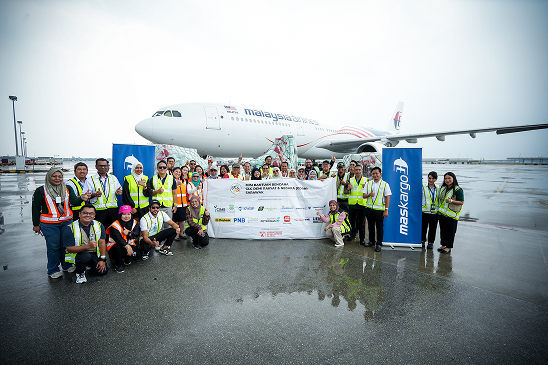
Malaysia Aviation Group (MAG), carries a different but equally important responsibility: as the parent of our national carrier, MAG is not simply managing down its own emissions. By co-chairing the National Sustainable Aviation Energy Task Force alongside the Civil Aviation Authority of Malaysia (CAAM), it is helping to build the supply architecture that determines how fast the entire sector can move under the Malaysia Aviation Decarbonisation Blueprint (MADB). Malaysia Airports Holdings Berhad, on the other hand, sits at the intersection of national access and international competitiveness. Its connectivity, passenger experience and trade facilitation carries consequences well beyond its own balance sheet.
The common thread across all these portfolio companies is not a uniform sustainability template, but a clearer expectation that each company understands its systemic role and is able to translate that role into required investments and measurable outcomes.
From Commitment to Conduct: The Measure that Counts
Over time, the effectiveness of this approach will be reflected less in the expansion of policies or reporting, and more in the consistency of behaviour. Success will be evident when sustainability is no longer framed as an external requirement but understood as integral to how businesses define their role within Malaysia’s development.
It reflects a continuation of a longer institutional trajectory, where each phase, from early conviction to analytical rigour to formal policy, has progressively moved sustainability closer to the core of investment thinking and decision-making.
When portfolio companies begin to articulate their contribution in these terms, and act on it, it signals a deeper level of integration that extends beyond compliance. That shift, when it takes hold across the portfolio, is what the Securing the Future framework ultimately seeks to achieve, that is the responsibility of generating wealth today while ensuring a secure, liveable and thriving future for generations to come.
Sidebar: The Energy Trilemma: Navigating the Pivot to a Low-Carbon Economy
By Mohammad Hilmi Yusof, Head of Energy Transition
For the sovereign steward, the energy transition is perhaps the clearest test of balance. It is shaped by the Energy Trilemma, which brings together the three interconnected priorities of Energy Equity, Environmental Sustainability and Energy Security.
In Malaysia, these priorities have clear practical implications. Energy Equity is not simply about affordability. It is about ensuring that households continue to have access to reliable energy at affordable and sustainable cost levels, while businesses and industries remain competitive in an increasingly demanding global economy. At the same time, attracting long-term investment into the energy system requires pricing structures that reflect the realities of infrastructure renewal, grid modernisation and future capacity needs. Energy Equity, therefore, requires balancing affordability, fairness, reliability and long-term investability of the system.
Energy Security, meanwhile, is ultimately about confidence in the continuity and reliability of supply. It is the assurance that homes remain powered, industries remain productive and critical national infrastructure continues to function without disruption from internal or external forces. As Malaysia’s economy becomes more digital, electrified and interconnected, the resilience of the power system, particularly the transmission and distribution network, becomes increasingly strategic as variability and electrification intensify.
Environmental Sustainability adds another layer of complexity. Malaysia’s transition towards net zero by 2050 must be pursued alongside economic growth and social stability. The challenge is to decarbonise responsibly, in a way that reflects Malaysia’s development needs while maintaining competitiveness and economic resilience.
Balancing these priorities will not be a straightforward undertaking. Progress in one area can create pressure in another, requiring tradeoffs to ensure that outcomes are aligned with system constraints, investment capacity and broader economic context. Accelerating Environmental Sustainability, for example, requires sustained investment in grid infrastructure, storage and system flexibility. Those investments are essential for Energy Security, but their cost must be carefully managed and sequenced to preserve Energy Equity. The transition therefore requires discipline, sequencing and a clear prioritisation of system needs at different stages of Malaysia’s energy journey.
Preparing for Complexity
Khazanah’s journey into the energy transition began with a recognition of the nation’s existing energy landscape. While the National Energy Transition Roadmap (NETR) sets ambitious targets for renewable energy (RE) penetration with a target of 70% by 2050, the reality is that our current grid was designed for a different era. Historically, power flowed in one direction from large and centralised thermal and hydropower plants to the consumer.
The pivot to RE introduces a fundamental operational challenge. Because solar and wind are intermittent and decentralised, they require a bi-directional “smart” system capable of handling volatility. This creates a significant capital challenge. Through our portfolio company, Tenaga Nasional Berhad (TNB), we are supporting a RM42.8 billion capital expenditure plan under Regulatory Period 4 (RP4) to modernise and upgrade the grid.
However, as a disciplined and responsible steward, we recognise the trade-offs in this investment. The challenge lies in accelerating this hardware upgrade to accommodate higher RE penetration while ensuring that the cost of this transition does not place an undue burden on the Rakyat or undermine the competitiveness of our industries. We are moving from a system of predictable supply to one of greater complexity, and the transition requires a phased approach with grid resilience as the baseline for Energy Security.
Synchronising Capital and Capability
The transition cannot be funded by the public purse or sovereign wealth alone. The sheer scale of the requirement necessitates a shift from being the provider of capital to becoming a strategic intermediary. This is where Khazanah faces a complex coordination challenge in moving fast enough to meet 2050 targets without outstripping the market’s capacity to absorb and deploy that investment.
The overarching aim is to support sustainable sector growth, with Khazanah playing a catalytic role alongside private sector participation. This is reinforced through broader public-private collaboration, including initiatives such as the MoF-led GEAR-uP programme to drive domestic investment, enable wider investor participation and scale green infrastructure.
In addition, through our own green investment platform, UEM Lestra, we are identifying and investing in opportunities that advance the nation’s energy transition agenda as we seek to accelerate market development and strengthen investor confidence. Together, these efforts position the energy transition not only as a decarbonisation agenda, but as a key driver of long-term economic value creation for Malaysia.
From Ambition to Execution
We are beginning to see the material results of this coordination through projects that bridge the gap between national policy and commercial viability.
Through our investment in TNB, we are supporting flagship projects under the NETR that serve as critical proof points for the transition. These include the development of Centralised Solar Parks and hybrid hydro-floating solar, which represent a significant shift in how we generate and integrate RE into the national grid.
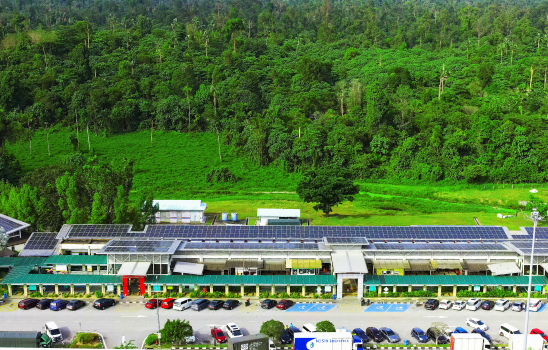
We are also seeing progress in the industrial sector through NUR Power, a subsidiary of UEM Lestra. The completion of a 50MW solar plant at the Kulim Hi-Tech Park, complemented by the transition to hydrogen-ready gas turbines, marks the beginning of an industrial decarbonisation pathway. These efforts advance environmental sustainability while helping our industrial hubs remain competitive as global demand for low-carbon manufacturing intensifies.
Beyond Decarbonisation: The Forward View
As we look toward the horizon, the energy transition is being pursued not merely as a decarbonisation agenda but as a primary driver of long-term economic value. A key pathway lies in extending beyond national borders through initiatives such as the ASEAN Power Grid. By enabling cross-border power trade and deeper regional connectivity, Malaysia can leverage its geographic position to participate in a more integrated and efficient regional energy marketplace, including the growing trade and deployment of RE across ASEAN.
At the same time, domestic system readiness remains critical. Priorities are shifting toward enabling technologies such as Battery Energy Storage Systems, as well as enhancing grid flexibility to support higher RE penetration without compromising supply security.
In this context, Khazanah’s role is to ensure that the transition is grounded in national priorities and aligned with energy equity. This includes strengthening energy security in an uncertain global environment, while managing costs and access to ensure that the benefits of the transition are shared across the economy.