

Capital with Purpose
Connecting the World to Malaysia

Building Resilience in National Connectivity
Malaysia’s strategic geographic position at the heart of Southeast Asia, its cultural diversity, tourism assets and established aviation infrastructure provide the foundations for it to become one of the region’s leading connectivity hubs. Connectivity, in this context, is more than transportation infrastructure. It is a strategic enabler of trade, tourism, investment and national competitiveness.
For Khazanah, connectivity represents one of the key pillars within our broader Advancing Malaysia mandate, alongside digitalisation, energy transition and transforming firms. The objective is not merely to move people efficiently, but to strengthen Malaysia’s position in regional and global economic flows.
Connectivity is also one of the most visible expressions of national competitiveness. It shapes how a country is accessed, experienced and valued by the world. Yet for many years, Malaysia’s ecosystem in connecting the country to the outside world was constrained not by a lack of capacity, but by a deeper structural imbalance that limited its full potential and ability to generate sustainable value.
At first glance, Kuala Lumpur appeared to be well-connected with frequent flights, various destinations and more, but the quality of its connectivity told a different story. The market had settled into an undesirable low-yield state, where Malaysia was perceived primarily as a low-cost transit point rather than a destination in its own right. This has been evidenced by its weaker long-haul connectivity and the lower tourism spend compared to our neighbours in Singapore and Bangkok.
This perception discouraged premium long-haul carriers, suppressed yields across the system and constrained reinvestment into both infrastructure and associated services.
The Diagnosis: Breaking the Low-Yield Cycle
It became increasingly clear that this was not a failure of any single institution, but a system that had gradually evolved out of alignment.
A major constraint within Malaysia’s aviation ecosystem was the imbalance between its strong short-haul connectivity and comparatively weaker long-haul connectivity. While regional and domestic seat capacity remained competitive, long-haul connectivity lagged regional peers such as Singapore and Bangkok, according to Malaysian Aviation Commission data.
Historically, the business case for premium global carriers to enter the Malaysian market was weak. The lack of demand for Kuala Lumpur as a destination suppressed the yields necessary for airlines to sustain long-haul routes. This reinforced underperformance of KLIA as a hub.
Our response began with a necessary admission: we were managing a system that had become out of sync and had been underinvested for decades. The airline was restructuring its software – its service, reliability and fleet – but it was doing so while the airport’s hardware was ageing.
At the same time, Kuala Lumpur, despite its role as the country’s economic hub, offered little to encourage tourists to stay longer.
Fixing connectivity, therefore, required more than capital, it required a structural realignment of the entire ecosystem.
The Hardware and the Software: Aligning the Hub
To break the low-yield cycle, we had to address a fundamental mismatch between the “hardware” of our infrastructure and the “software” of our service delivery. As a major shareholder in both the airport and the airline, we recognised that these entities could no longer solve their problems in isolation.
The first step was a pragmatic response to the challenges at Malaysia Airports Holdings Berhad (MAHB). As a listed entity, MAHB was constrained by quarterly market expectations and dividend pressures, even as the sector required significantly higher capital expenditure to modernise infrastructure, remediate ageing assets and accelerate expansion. Rebuilding competitiveness required a different operating model, one capable of supporting long-term capital deployment, operational transformation and disciplined execution over multiple years.
Leading the privatisation of MAHB was therefore a structural intervention intended to reposition Malaysia’s aviation ecosystem for the long term. It now had the “quiet space” required to focus on long-term operational transformation and to rebuild its status as a world-class gateway.
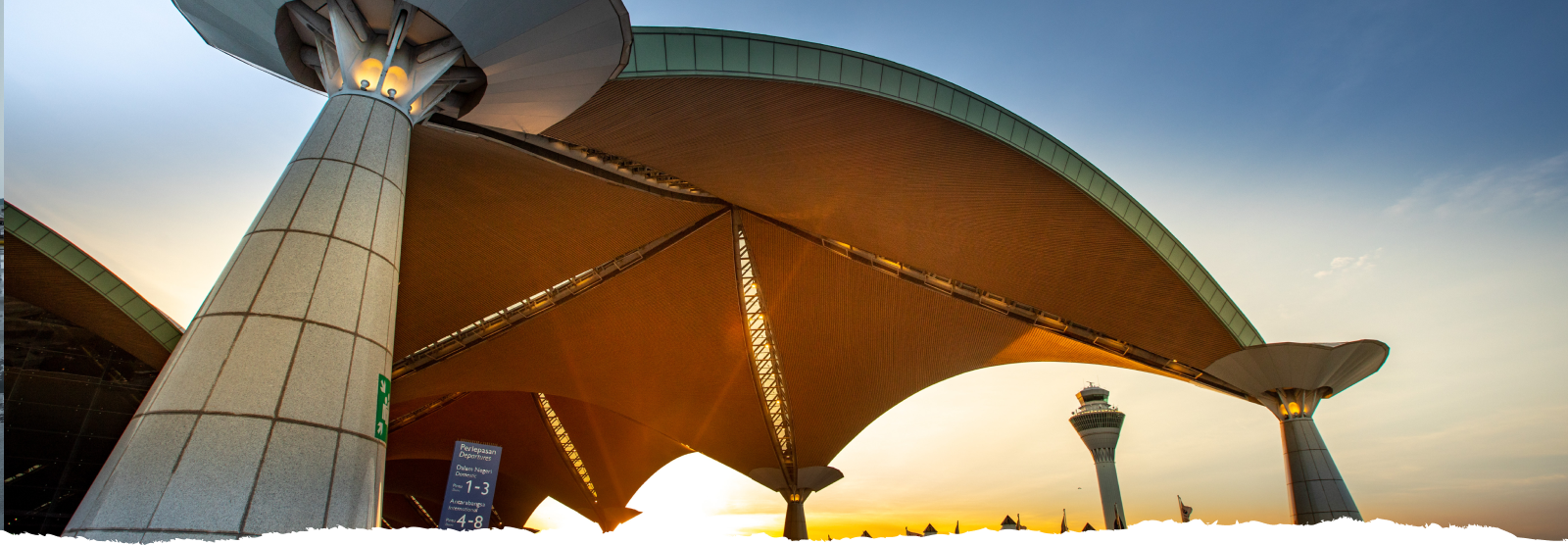
The aspiration was not merely to improve airport operations, but to restore KLIA’s position as a leading regional hub capable of competing with airports such as Changi and Suvarnabhumi through stronger connectivity, better passenger experience, faster project execution and enhanced commercial offerings.
Performance indicators have been encouraging following the privatisation. In 2025, MAHB handled 104.4 million passengers across its Malaysian network, representing an 11.2% increase year-on-year, while KLIA alone recorded 63.3 million passengers, up 10.8%.
Beyond passenger growth, the return of global carriers such as British Airways and Lufthansa, alongside new entrants such as Fits Air and Juneyao Airlines reflects renewed confidence in Malaysia’s aviation ecosystem and long-term hub potential.
In parallel, we remained committed to the restructuring of Malaysia Aviation Group (MAG). This was a difficult, decade-long journey, but it was essential for building the “software” of our connectivity.
For years, the national carrier underwent a prolonged restructuring journey marked by operational and financial challenges, which affected its ability to consistently support Malaysia’s ambitions as a regional aviation hub. Reliability, operational stability and customer experience remained key areas requiring improvement. Strengthening the national carrier was therefore critical to reinforcing KLIA’s role within the broader connectivity ecosystem.
The turnaround therefore required more than cost rationalisation. It demanded operational discipline, fleet optimisation, service recovery and the rebuilding of customer trust. By focusing on these priorities, the carrier has begun to find its footing as a reliable anchor for the hub.
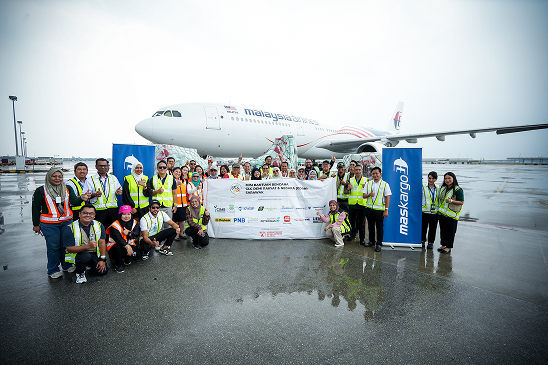
By 2025, the airline recorded a net income after tax of RM137 million, marking its third consecutive year of profitability and a 154% increase from RM54 million in 2024. This improvement was underpinned by stronger operational performance, with on-time performance rising from 72% in 2024 to 88% as of 1Q 2026, alongside meaningful gains in global rankings and customer perception.
Over time, it has become increasingly clear that the turnarounds at the airport and the national carrier are not to be treated as separate optimisation exercises. Their long-term competitiveness is fundamentally interdependent, requiring coordinated transformation across infrastructure, operations, connectivity and destination development.
The Hub Logic: Creating Demand through Flow
Malaysia’s domestic market, while meaningful, is not large enough to support the frequency and variety of long-haul routes needed for a world-class hub. The solution, therefore, lies in aggregation and a pivot to a hub-and-spoke strategy that leverages Malaysia’s geographic advantage.
By focusing on transit corridors, we aggregate global demand into KLIA. This transit volume provides the base load that makes long-haul routes commercially viable. When we increase the frequency of flights to Sydney or London and resume long-haul services to Paris to accommodate transit passengers, we simultaneously make those routes more convenient and attractive for high-yield, point-to-point business and leisure travellers.
In this model, connectivity becomes a self-reinforcing loop: greater transit flow justifies more routes, and more routes increase the attractiveness of KL as both a hub and a destination.
Portfolio Convergence: From Transit to Destination
As the hub strengthens, a more fundamental challenge remains. Although Malaysia is becoming increasingly efficient at moving passengers, it needs to capture sufficient value from these flows. Addressing this requires Malaysia to be both an efficient transit point and a destination of choice.
It was through Khazanah’s broader Connectivity pillar under the Malaysian Investment Strategy that a critical insight emerged. While Kuala Lumpur serves as the country’s main gateway, the city was not fully translating visitor arrivals into deeper engagement, longer stays and stronger tourism yield. The challenge was not a lack of history or character, but the ability to make visitors meaningfully connect with them.
This was the starting point of integrating Dana Warisan into the broader connectivity ecosystem. Announced by the Government following the tabling of Budget 2023 and reinforced in subsequent national initiatives, Dana Warisan reflects a broader effort to preserve and rejuvenate strategic heritage assets as part of long-term nation-building and urban revitalisation.
Rather than treating heritage conservation as a standalone restoration exercise, Khazanah positioned it as a catalyst for urban regeneration and place-making, strengthening Kuala Lumpur’s attractiveness as a cultural and experiential destination while reinforcing the broader aviation and tourism ecosystem.
Furthermore, the objective is not merely to preserve old buildings, but to return them to active public life as galleries, civic spaces and cultural anchors capable of revitalising the city centre while strengthening national identity and pride. In this context, heritage assets are viewed not as static monuments, but as living spaces that must remain relevant, accessible and economically sustainable over the long term.
The early response has been encouraging. Bangunan Sultan Abdul Samad has welcomed over 150,000 visitors, while Seri Negara recorded more than 16,000 visitors within months of reopening. These figures signal a shift in visitor behaviour towards deeper engagement and longer dwell time, which are key drivers of tourism yield.
For Khazanah, heritage preservation is ultimately not about nostalgia. It is about safeguarding collective memory, restoring meaning and ensuring that the stories, identity and civic foundations of the nation continue to remain lived, understood and transferred to future generations.
The Systemic Outcome: Evidence of a Strengthening Ecosystem
The validity of these efforts is best measured by the return of global confidence and the restoration of commercial health. By addressing structural flaws while simultaneously regenerating demand through place-making, we are seeing the first signs of a self-sustaining connectivity ecosystem.
The most immediate proof lies in the resurgence of the national carrier. After a decade of fundamental restructuring, MAG recorded its first positive net profit since 2010. This was supported by a 31% year-on-year increase in passenger traffic, effectively restoring capacity to 90% of pre-pandemic levels. However, the most critical markers of this turnaround are found in the customer experience.
The carrier has achieved a significant recovery in its On-Time Performance (OTP), a vital metric for a hub-and-spoke model where seamless connections are the primary product. This reliability, coupled with a 12-point improvement in its Net Promoter Score (NPS), signals that MAG is successfully repositioning itself to command the yields necessary for long-term sustainability.
This internal stability has revitalised the airport’s ability to build international prestige. The momentum at MAHB is validated by the increase in passenger movements and the return of global carriers to KLIA, recognising the value of the Malaysian gateway.
The final piece of this strategy lies in the physical integration of the heritage core into the broader visitor journey. As we progress into 2026, this will be reinforced by the opening of the Pejabat Pos Besar Lama, a part of the wider Bangunan Sultan Abdul Samad complex, and the completion of a 600-metre pedestrian bridge linking the Perdana Botanical Gardens to Carcosa and Seri Negara. Delivered in partnership with Kuala Lumpur City Hall (DBKL) and with the support of the Ministry of Finance (MoF), such enhancements will further strengthen coherence and attractiveness.
Conclusion: Sustaining the Flywheel’s Momentum
The priority now is to sustain and deepen this momentum. This will require continued discipline in execution by expanding long-haul connectivity, maintaining operational reliability and delivering infrastructure upgrades in a coordinated and timely manner.
At the same time, Kuala Lumpur’s evolution as a destination must continue to support Visit Malaysia Year 2026, alongside sustained alignment across the ecosystem. Connectivity is not a one-off achievement, but an ongoing process of coordination and adaptation.
It is important to recognise that this progress marks only the beginning. The work of rebuilding and strengthening a national connectivity ecosystem is inherently longterm and complex. It will require sustained commitment, careful coordination and resilience through cycles. This will be a long and, at times, arduous journey. Yet, it is one we approach with conviction. The early signs of alignment across infrastructure, operators and destination give us confidence that we are on the right path. The broader lesson from this effort is that connectivity cannot be strengthened through isolated interventions. Airports, airlines, tourism assets and urban experiences must evolve as part of an integrated ecosystem.
When these components are aligned, connectivity becomes more than mobility infrastructure. It becomes a catalyst for tourism, investment, talent flows, economic complexity and national competitiveness.
For Khazanah, this reflects the essence of our role as an investor with a purpose that strengthens strategic ecosystems not only to generate sustainable value, but to advance Malaysia over the long term and deliver enduring value for Malaysia and its people.
Sidebar 1: Restoring Heritage, Reopening Memories
By Selvendran Katheerayson, Head, Real Assets
What Was Restored
Seri Negara, Bangunan Sultan Abdul Samad (BSAS) and Pejabat Pos Besar Lama, three nationally significant heritage assets under Dana Warisan.
Why It Was Complex
All the buildings carry heritage status, requiring their conservation to be undertaken with a far higher level of complexity and sensitivity. Every intervention had to carefully balance conservation integrity with safety, accessibility, public use and long-term operating requirements. Seri Negara’s restoration emphasised the site’s authentic architectural character while enhancing safety, accessibility and public facilities. BSAS was restored with a focus on safeguarding its character as a National Heritage building while improving the visitor experience. The Pejabat Pos Besar Lama (Old General Post Office), which forms part of the wider BSAS complex, has also been carefully conserved and adapted for new use. Reopened to the public in May 2026, the historic building now enters a new chapter as a renewed civic and heritage destination for all visitors.
Time Taken
Seri Negara:
10 months
Bangunan Sultan Abdul Samad:
11 months
Pejabat Pos Besar Lama:
11 months
Who Came Together
The effort was undertaken under the larger Warisan KL initiative, a national heritage and culture-led urban rejuvenation initiative that brings together government agencies, GLCs, GLICs, private sector partners and communities. Key government stakeholders ensuring the successful conservation and reopening of these buildings include the Finance Ministry, the Department of Federal Territories, Dewan Bandaraya Kuala Lumpur, the Department of Director General of Lands and Mines, and the Department of Heritage.
What Changed
The restored buildings were not returned as static monuments. Seri Negara now features galleries and F&B offerings, while BSAS offers exhibition spaces, galleries, a visitor centre, retail and craft-making spaces, event venues and F&B offerings. The Pejabat Pos Besar Lama houses unique Malaysian F&B outlets that count on offerings that celebrate Malaysia’s culinary heritage and history.
Why It Matters
Dana Warisan positions conservation as part of a wider cultural connectivity agenda, linking restoration with public access, cultural content, tourism activation and urban renewal. In practical terms, it turns heritage assets into lived public spaces that add depth to Kuala Lumpur’s visitor experience and strengthen the city’s role as a cultural destination.
Sidebar 2: Flying Through Volatility
By Azmir Zain, Head, Connectivity (Airlines)
MAG Soaring Towards A Position of Strength
In 2025, MAG posted RM1.6 billion in EBITDA and RM137 million in net income after tax on the back of RM14.7 billion in revenue. MAG also recorded a 16% increase in Available Seat Kilometres and an 81% passenger load factor. On-time performance also improved to 81% by year-end, reflecting better operational discipline despite higher flight volumes.
2026 Operating Backdrop
MAG enters this period from a more stable operating and financial position. However, geopolitical tensions disrupted energy markets and pushed jet fuel costs sharply higher, resulting in renewed uncertainty for the global aviation industry. MAG has flagged that higher fuel prices, insurance premiums, rerouting and flight cancellations may weigh on its 2026 financial performance, even as demand for key long-haul routes continues to hold.
Why It Matters to MAG
Fuel is one of the most significant cost items for an airline, including MAG. As such, movements in fuel price can have a material impact on MAG’s financial performance. The Group has nevertheless hedged a fair portion of its 2026 fuel needs, thereby providing some cushion to the impact arising from the Middle East conflict.
What to Watch Operationally
MAG’s 2026 priorities are expected to centre on disciplined capacity growth, route resilience, fleet efficiency and customer experience, whilst keeping a close eye on its cash flows. The Group has resumed services to Paris and Brisbane, increased frequencies to key markets and continued its fleet renewal programme, including the A330neo and new narrowbody aircraft commitments.
Sidebar 3: Rebuilding the Gateway for the Next Cycle
The Post-Privatisation Shift
MAHB’s privatisation in early 2025 marked a shift from a listed company operating rhythm to a longer-term transformation platform. The most material change has been a sharper alignment between operating model, investment discipline and the ambition to raise Malaysia’s airports towards world-class standards. While it is still early days, this has allowed MAHB to adopt a more commercial and partnership-led posture with airlines, agencies and local stakeholders.
Early Execution Wins
MAHB’s early progress has been driven by a series of targeted, practical initiatives focused on enhancing passenger experience and improving operational efficiency, alongside disciplined capital delivery. Key operational initiatives include the implementation of Vehicle Access Management System at KLIA Terminal 1 to ease kerbside congestion, as well as the deployment of self-service check-in kiosks at Penang, Kuching and Kota Kinabalu to streamline passenger flow. In parallel, MAHB has adopted a refreshed capital investment strategy aimed at upgrading ageing infrastructure and supporting capacity expansion across its network. This includes projects such as the Ipoh Airport expansion, which increased its passenger handling capacity by 40%.
A Stronger Airport System
In 2025, Malaysia Airports handled 104.4 million passengers across its Malaysian network, an 11.2% year-on-year increase. KLIA recorded 63.3 million passengers, up 10.8% from 2024, while its Skytrax ranking improved to 65th in 2025, from 71st in 2024. These indicators point to stronger operational planning and closer coordination with stakeholders such as airlines and government agencies.
Sustainability Lens: Renewable Energy Adoption
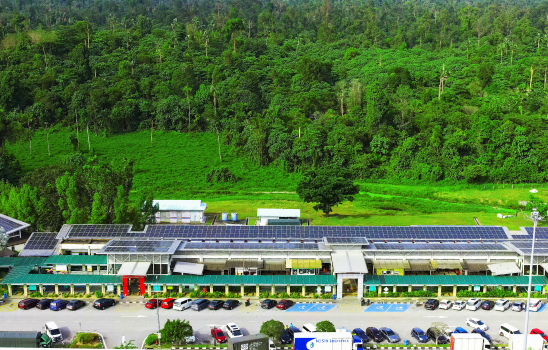
MAHB’s transformation also extends to energy. The airport operator is developing a large-scale solar project on approximately 100 acres near KLIA, targeting 30MW of generation capacity to supplement KLIA’s energy requirements. A second phase is planned in the same vicinity, while rooftop solar installations are being considered for smaller regional airports nationwide.
2026 Outlook: Disruption and Opportunity
The 2026 outlook is shaped by external headwinds, particularly fuel price pressures and evolving geopolitical developments affecting regional airspace. These factors have led airlines to recalibrate capacity and network deployment. Amidst these headwinds, international passenger numbers have remained comparatively resilient, signalling the underlying strength of KLIA as a regional hub. MAHB continues to focus on sustaining connectivity, capturing emerging opportunities and supporting airline partners in rebuilding momentum.
Repositioning KLIA in Shifting Travel flows
The disruption is also changing how passengers move between Asia, the Middle East and Europe. As some travellers avoid Middle Eastern transit routes, MAHB sees an opportunity to position KLIA as an alternative transit hub for passengers travelling between Asia and Europe. MAHB is strengthening KLIA’s proposition as a regional hub through targeted airline attraction, expanded route development efforts and proactive engagement with foreign carriers to capture displaced international capacity.
Preparing for Visit Malaysia 2026
MAHB is strengthening collaboration across the aviation and tourism ecosystem to make Visit Malaysia 2026 a success. Early outcomes include the introduction of new airlines at KLIA, such as Chongqing Airlines connecting to Chongqing and Air Algerie linking Algeria, further enhancing KLIA’s connectivity with the African continent.
Efforts to improve passenger flow are also being advanced through initiatives such as the Green Lane programme at KLIA Terminal 1, introduced to expedite clearance and reduce congestion, developed in close collaboration with the Royal Malaysian Customs Department and the Border Control and Protection Agency (AKPS). In parallel, MAHB continues to elevate the overall passenger experience through service enhancement initiatives such as the launch of RIMBA at KLIA Terminal 1, a nature-inspired rest space for passengers.
Why It Matters
For Malaysia, a stronger airport system is not just about higher passenger volumes. It creates the operating foundation for tourism flows, business travel, airline confidence and long-term national connectivity. The post-privatisation reset gives MAHB the platform to move from incremental fixes towards a more coordinated, scalable and resilient gateway network.